

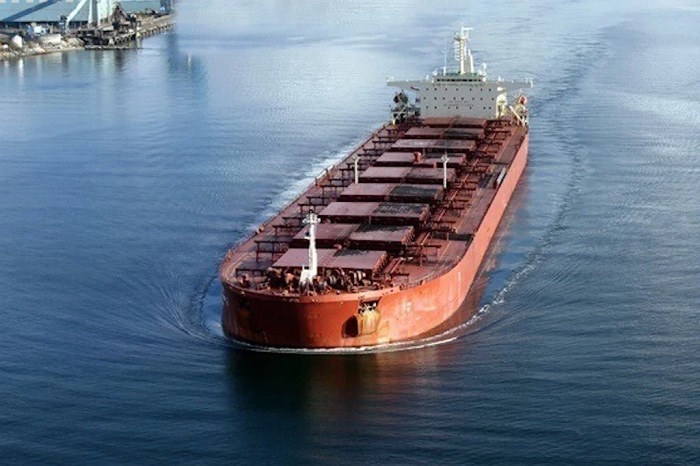
Kiev Shipping Ltd has provided ship chartering and maritime brokerage services since 2000, working with cargo owners, traders, manufacturers, shipowners and operators across international freight markets.
With 25+ years of experience, Kiev Shipping Ltd focuses on ship chartering and maritime brokerage for dry bulk, breakbulk and project cargoes. The company works as an independent shipbroker and does not own vessels.
Ship Chartering and Maritime Brokerage
Ship chartering involves more than simply finding an available vessel.
A commercially workable fixture requires the cargo, vessel, route, ports and charter-party terms to be evaluated together.
The process normally begins with a complete cargo enquiry containing:
- cargo description;
- total quantity;
- packing, where applicable;
- dimensions and individual weights for project or breakbulk cargo;
- loading port;
- discharging port;
- laycan;
- loading rate;
- discharging rate;
- draft restrictions;
- terminal limitations;
- special cargo requirements.
Accurate information allows the freight market to identify more suitable vessels and provide more realistic freight indications.
Dry Bulk Cargo
Dry bulk cargoes may include:
- wheat;
- corn;
- barley;
- fertilizers;
- urea;
- potash;
- coal;
- ores;
- cement;
- clinker;
- gypsum;
- salt;
- other bulk commodities.
For dry bulk shipments, vessel selection may depend on cargo quantity, stowage factor, deadweight, cubic capacity, draft restrictions and port limitations.
The vessel should be matched to the actual cargo requirement rather than selected on freight rate alone.
Breakbulk Cargo
Breakbulk cargoes can include:
- steel products;
- machinery;
- industrial equipment;
- bagged cargoes;
- construction materials;
- packaged goods;
- oversized units.
Important vessel characteristics may include hold dimensions, hatch dimensions, cargo gear, crane capacity, draft and cargo access.
Loading and discharging arrangements should also be checked before a fixture is concluded.
Project Cargo
Project cargo shipments require additional technical information.
Depending on the cargo, this may include:
- dimensions;
- individual weights;
- lifting points;
- centre of gravity;
- drawings;
- loading method;
- discharging method;
- port restrictions;
- lifting requirements.
Heavy and oversized cargoes should be evaluated against the vessel’s deck or hold configuration, crane capacity, deck strength, hatch dimensions and other technical limitations.
Vessel Selection
An available vessel is not automatically the correct vessel.
Suitability may depend on:
- vessel deadweight;
- cubic capacity;
- draft;
- hold configuration;
- hatch dimensions;
- cargo gear;
- crane capacity;
- port restrictions;
- cargo handling requirements;
- vessel position.
A commercially attractive vessel may still create additional costs if it is not properly suited to the cargo or ports.
Freight Market Factors
Freight rates change with market conditions.
Important factors may include:
- vessel position;
- cargo quantity;
- route;
- vessel size;
- laycan;
- bunker prices;
- port costs;
- canal costs;
- congestion;
- loading and discharging rates;
- seasonal cargo flows;
- availability of suitable tonnage.
For this reason, freight indications should be considered in the context of a specific cargo requirement and current market conditions.
Charter Party Terms
Before fixing a vessel, the principal commercial terms should be clearly agreed.
These may include:
- freight;
- freight payment;
- laytime;
- demurrage;
- despatch;
- loading responsibilities;
- discharging responsibilities;
- notices;
- cargo documentation;
- commissions;
- charter-party form;
- special operational conditions.
Clear fixture terms help reduce the risk of commercial disagreements during voyage execution.
The Role of the Shipbroker
Kiev Shipping Ltd acts as an independent intermediary between cargo interests and the international freight market.
The company assists with:
- searching for suitable tonnage;
- obtaining freight indications;
- comparing vessel alternatives;
- negotiating freight;
- negotiating commercial terms;
- coordinating fixture negotiations;
- charter-party coordination;
- commercial voyage follow-up.
The objective is to match the cargo requirement with suitable tonnage and commercially workable transportation terms.
More information about ship chartering services is available on the dedicated Kiev Shipping page.